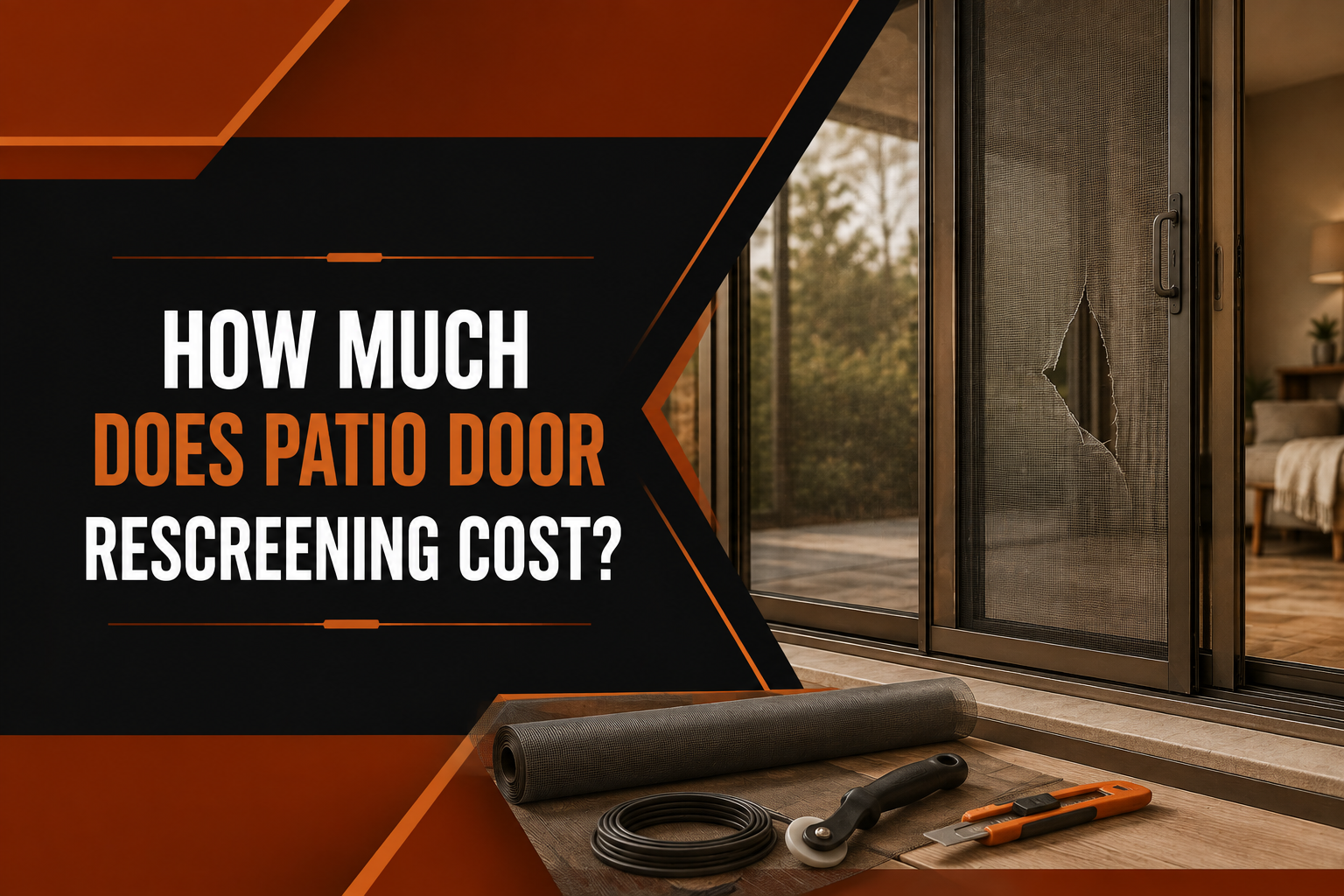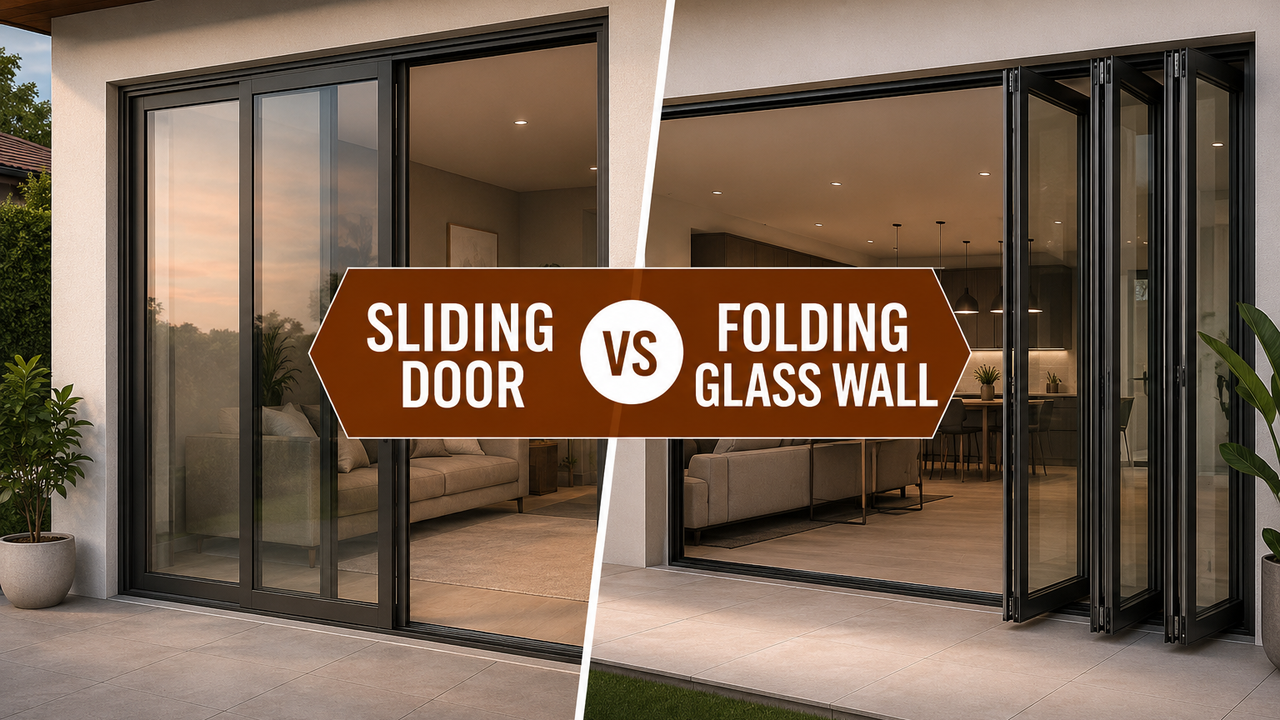
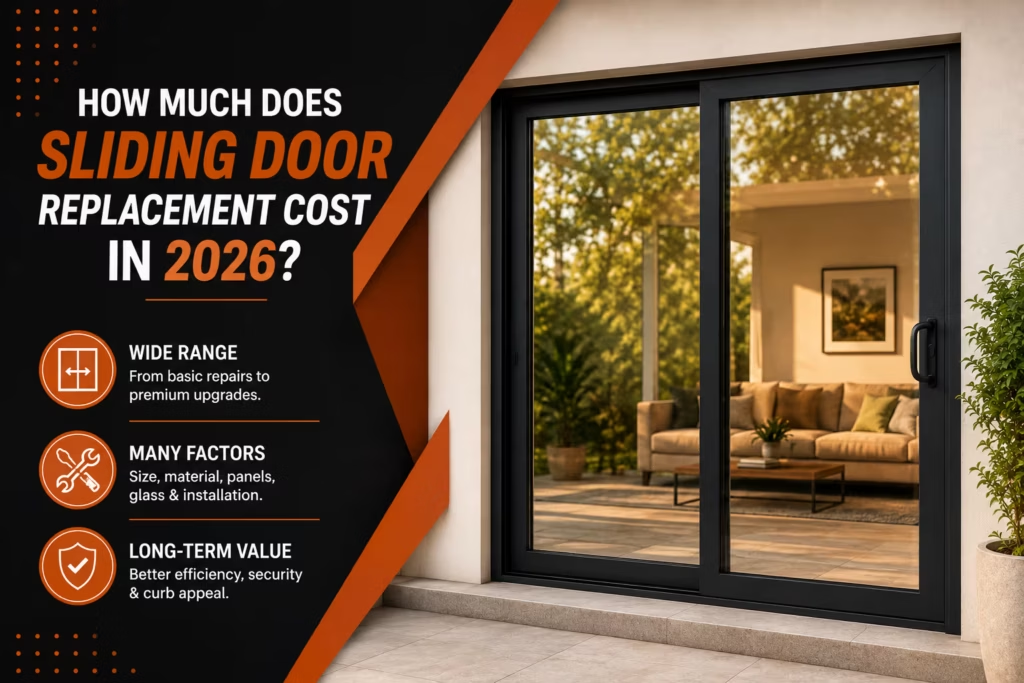
In 2026, most homeowners can expect sliding door replacement to cost roughly $1,169 to $4,146 for materials and professional installation, with an average around $2,564. Larger, premium, multi-panel, or structurally complicated projects can cost considerably more.
The cost estimate for a sliding patio door replacement project in 2026 provided by This Old House places sliding patio door projects can vary from about $600 to $10,000 due to the influence of many factors like size, construction material, glass, configuration, and complexity of the installation.
In our experience, the most useful question is not simply, “How much does a sliding door cost?”
It is:
What exactly needs to be replaced, and what condition is the existing opening in?
A standard two-panel door going into a sound existing opening may be relatively straightforward. A large custom door with damaged framing, premium glass, or structural changes can become a much larger renovation.
Here is a practical starting point for budgeting.
Project | Typical 2026 Cost Direction |
Minor rollers or track work | $110–$300 |
Glass-only replacement | $250–$1,000+ |
Standard sliding door project | Often $1,169–$4,146 installed |
Average sliding glass door project | About $2,564 |
Multi-panel system | $2,500–$6,500 |
Large/premium sliding patio door | Can reach $10,000+ |
New opening in an existing wall | Significantly higher than direct replacement |
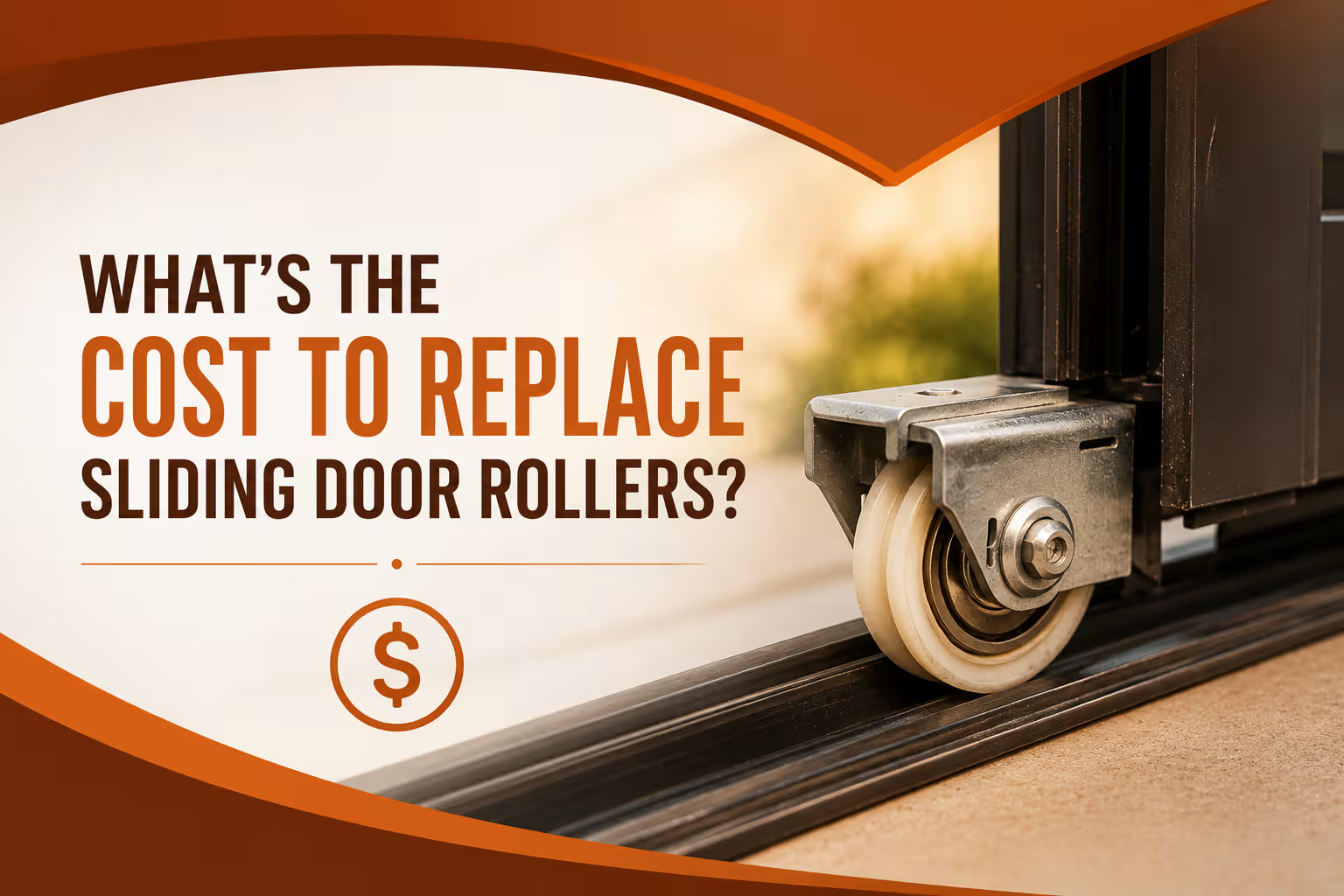
Current Angi data places roller and track replacement around $110–$300 and glass replacement around $250–$1,000, while full door installations commonly fall into the low-to-mid thousands.
If the frame and opening are healthy, replacement tends to stay closer to normal patio-door pricing. Structural repairs, custom sizing, premium glass, and larger configurations are what push projects upward.
Before giving a quote, we evaluate whether the homeowner needs:
These are very different projects.
Many homeowners don’t realize that a difficult-to-slide patio door does not automatically need complete replacement.
Sometimes the problem is concentrated in worn rollers, damaged tracks, or poor alignment.
Door size has a major effect on pricing.
Larger doors require more frame material, more glass, heavier panels, and often more labor to move and install.
Current Angi estimates give the following examples.
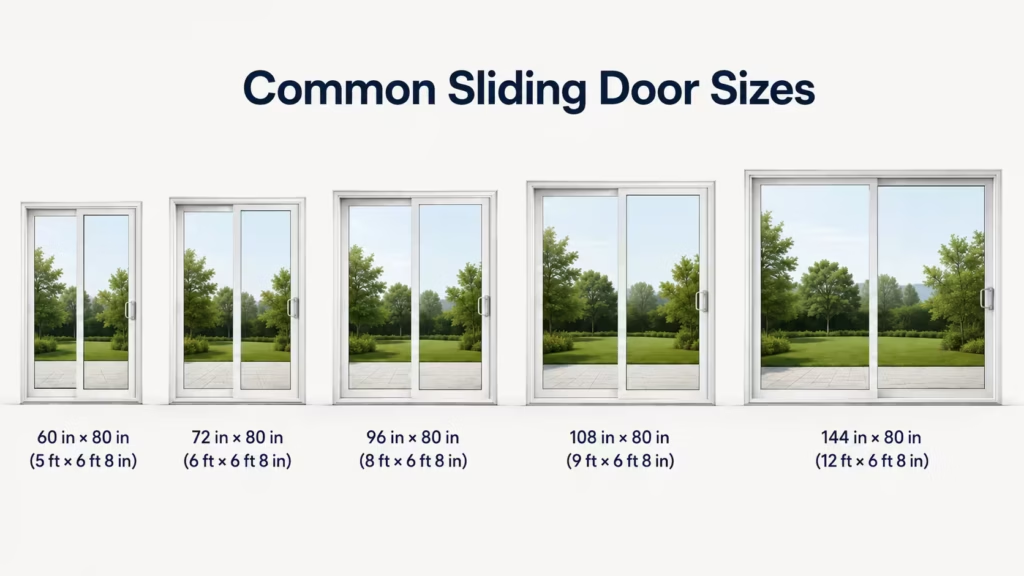
Door Size | Approximate Cost |
60 × 80 inches | $1,000 |
72 × 80 inches | $1,200 |
96 × 82 inches | $1,600 |
96 × 96 inches | $1,900 |
108 × 80 inches | $2,100 |
108 × 96 inches | $2,220 |
144 × 96 inches | $2,900 |
These numbers are useful for comparison, but they should not be treated as fixed quotes.
A premium 72-inch door can cost more than a basic 96-inch door because size is only one pricing factor.
Instead of looking at dozens of small variables, we usually explain the project through three major cost drivers.
A larger opening generally means:
Oversized panels may also require additional installers simply because of their weight and dimensions.
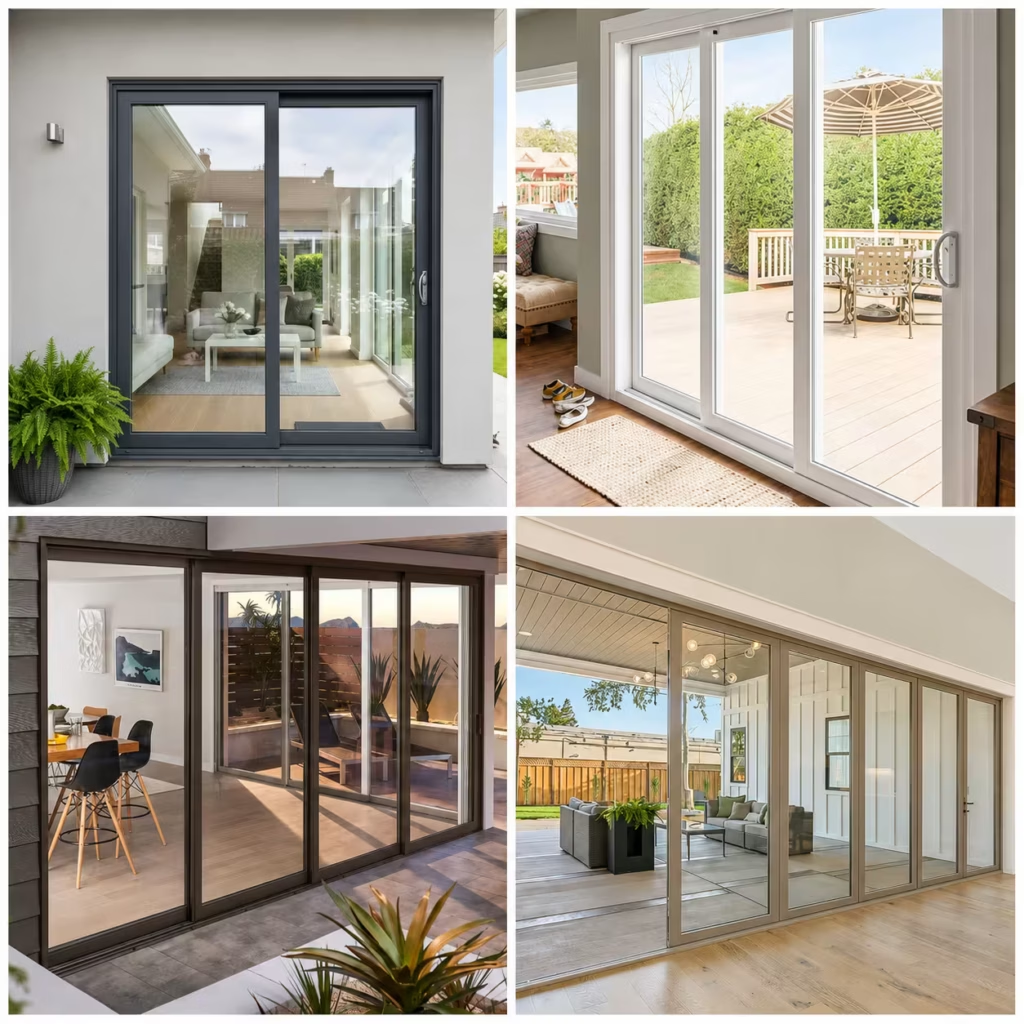
A basic two-panel slider is usually cheaper than a three- or four-panel configuration.
Current 2026 Angi estimates show approximate ranges of:
Panels | Estimated Cost Range |
Two panels | $400–$2,400 |
Three panels | $1,500–$5,000 |
Four panels | $2,500–$7,000 |
Large multi-panel doors can create impressive openings, but additional tracks, glass panels, locks, rollers, and frame sections raise the material and labor requirements.
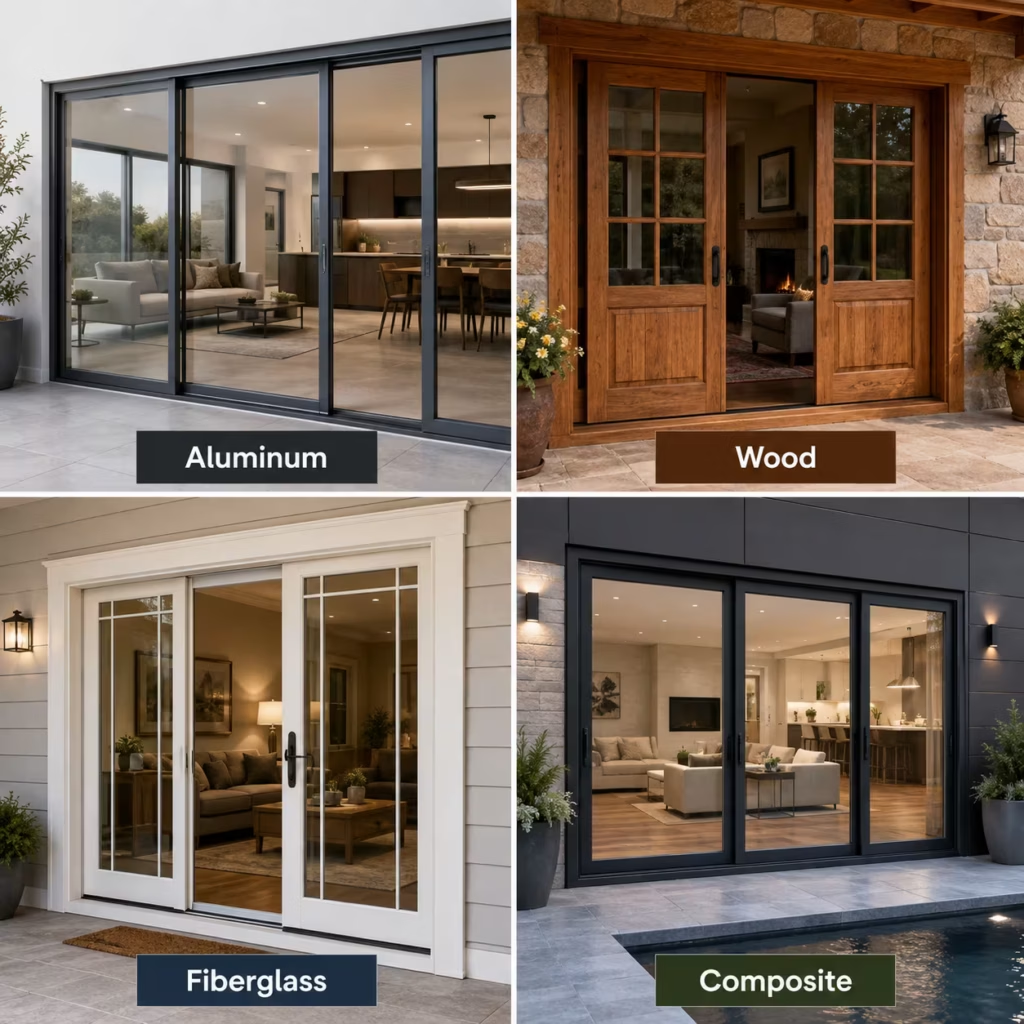
Frame choice affects both upfront price and long-term maintenance.
Current cost estimates place many vinyl sliding-door frames around $300 to $1,200.
Advantages often include:
Vinyl is typically used in practical home substitutes.
The typical cost estimate of frames is about $750 to $2,500.
Aluminum can provide:
Good thermal performance is highly dependent on the particular frame construction used.
Wood frames can range around $1,000 to $3,000 based on current estimates.
Homeowners often choose wood for its appearance, especially in traditional or premium homes.
This material usually needs much maintenance in comparison with vinyl.
Current estimates place fiberglass around $1,500 to $2,500.
It can provide a combination of:
Composite frame estimates commonly range from roughly $600 to $1,200.
Labor represents a meaningful part of the total project.
Angi’s current 2026 data puts professional installer labor around $70 to $100 per hour, or approximately $300 to $800 for many complete installation projects.
This Old House gives a broader labor estimate of approximately $400 to $1,400 or more, depending on project complexity.
Why such a large range?
Because sliding door installation can mean two very different things.
Remove an existing standard slider and install another similar-size unit.
Remove a wall section, modify framing, install a new header, create the sill, waterproof the opening, install a large multi-panel unit, and repair surrounding finishes.
Calling both projects “door installation” hides most of the cost difference.
Averages become easier to understand when we put them into realistic situations.
Existing condition:
New system:
Likely result: relatively close to the lower or middle end of normal replacement ranges.
Existing condition:
New system:
Likely result: mid-range to upper-mid-range replacement.
The homeowner is paying not only to replace the old door but also to improve the complete system.
Existing condition:
New plan:
Likely result: high-end project.
At this point, the door is only one component of a larger renovation.
One issue we frequently encounter is homeowners overspending on features they don’t actually need.
Before any project, we evaluate both the door and surrounding structure.
Replacement costs for sliding doors in the year 2026 will depend on several factors such as material, size, and complexity of sliding door installation. Based on our experience, it is more prudent to go for quality material and installation, rather than taking the cheap route. This ensures that the investment pays off in the long run.
Yes. Larger doors require more glass, framing, hardware, handling, and installation labor.
Technically, some experienced homeowners can complete the work, but a full patio door is heavy and proper leveling, flashing, sealing, and alignment are critical.
Yes. Custom dimensions require specialized manufacturing and can also increase freight, glass handling, trim work, and installation labor.
A new door can improve appearance, natural light, operation, security, and energy performance, all of which may improve buyer appeal.
Get personalized recommendations and professional installation support today.
Explore everything you need to know about sliding doors, from modern design ideas and space-saving solutions to installation tips, maintenance advice, materials, and the latest trends.
Fast, dependable patio door solutions with expert installation, lasting performance, and exceptional craftsmanship.